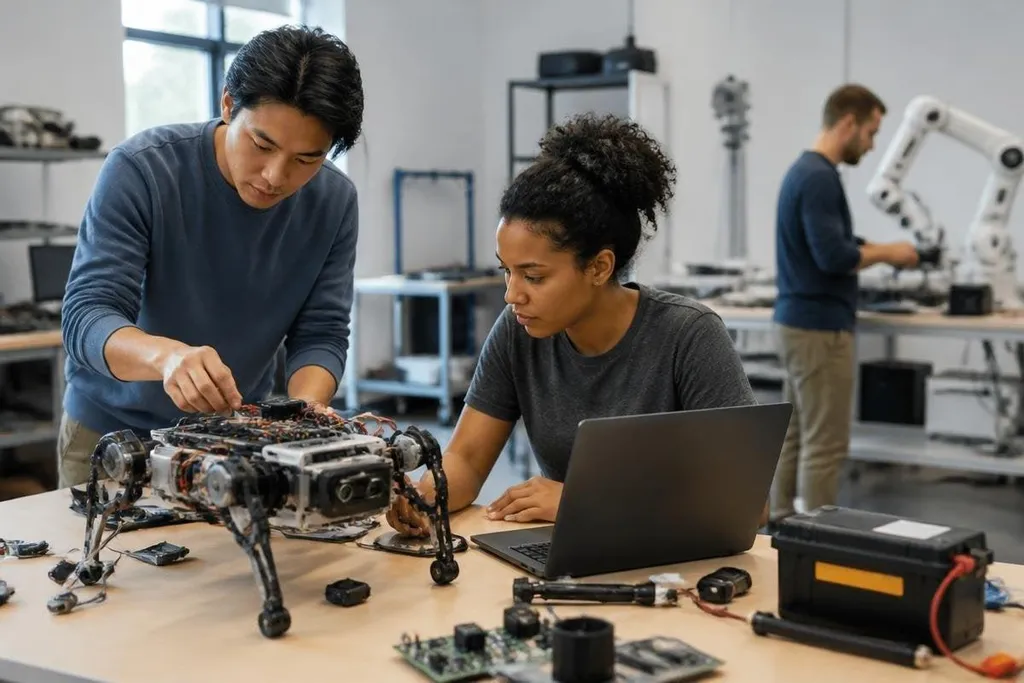
AI is changing robotics work before it replaces many robotics jobs. Engineers now spend more time checking generated code, training models, and connecting software to physical machines. For you, the useful question is which skills gain value as these tools enter daily work.
Quick read
- Robot work is shifting toward system design, testing, and safety checks.
- AI can speed up code and data tasks, but physical tests still expose mistakes.
- New hires need robotics basics plus software, data, and communication skills.
Where the work is moving
A robotics team still needs people who understand motors, sensors, batteries, robot arms, mobile bases, and safety systems. AI can write part of a program or suggest a fix, but someone must check whether that code fits the robot's hardware and operating limits.
That changes the daily work. A technician may spend less time typing routine code and more time checking sensor data, setting up tests, and tracing faults. A software engineer may review AI-written functions, then run them in simulation before anyone connects them to a real arm.
Simulation is useful because it lets teams test movement without risking a person or a costly machine. It doesn't settle the matter. A real floor has loose cables, changing light, worn parts, and objects placed a few centimeters away from their expected position.
Those gaps create work for people who can compare a model's output with physical results. They need to spot when a robot has learned a pattern that works in a test room but fails beside a conveyor.
The skills employers will look for
The strongest path is a mixed one. You don't need to become a specialist in every part of robotics, but you do need enough range to understand how the parts affect each other.
A useful skill set includes:
- Robot basics: Read a wiring diagram, understand joint limits, and explain what a sensor measures.
- Software: Write and check Python or C++ code, use version control, and read logs when a task fails.
- Data work: Clean sensor records, label images, and check whether training data matches the work area.
- Model testing: Compare AI output with a fixed test set instead of trusting a smooth demo.
- Safety: Use stops, limits, and risk checks before a new model controls a physical machine.
- Clear reports: Record what failed, under which conditions, and what changed after a fix.
These skills apply across robot arms, warehouse vehicles, inspection machines, and research platforms. They also help you move between roles when a project changes direction.
New jobs, changed jobs, and missing skills
Some roles will gain AI tasks without changing their names. A controls engineer may check a model that predicts motor behavior. A field technician may collect examples from a customer site so a vision system can handle new parts. A project manager may need to ask whether a model can run within the robot's computer and power limits.
Other roles may grow around data and testing. Teams need people who can prepare training data, write test cases, review failures, and track which model version ran on a machine. Those tasks connect office work to the robot on the floor, so a person who understands only one side may struggle to find the fault.
For someone choosing this path, reports on robotics jobs and machines can connect data and testing tasks to named robots, work sites, and failure records. The software work still ends at a machine that carries weight, senses contact, and wears out.
The open limit is physical reliability. AI can suggest a path, label an image, or write a control routine, but the robot still has to handle weight, contact, delay, heat, and wear. A career plan built around tool use alone will age quickly; one built around testing physical systems has a better chance of lasting.
A practical career check
Use this list before choosing a course, project, or first job:
- Build one small robot project that uses a sensor and records its results.
- Read the code line by line after an AI tool writes it.
- Test the same task in simulation and on hardware, then record the difference.
- Learn one programming language well enough to fix a fault without copying a full answer.
- Ask how a team checks safety before software reaches a moving robot.
- Save short reports on failures, changes, and test results for your work portfolio.
A portfolio like this gives an employer something to inspect. It shows how you think when the machine behaves differently from the plan, which is where robotics work stays physical.
I'd choose a course with real hardware and testing over one built around AI prompts alone. The next useful career question is simple: can you show a robot task, the failure it produced, and the evidence that your fix worked?